A Safer Workday Through Cooperation
Mika Elsilä has served as Meka Pro’s appointed occupational safety manager since 2013. Currently working as the company’s Operations Manager, Mika has been with Meka for 30 years as of July 2025 and has seen many sides of occupational safety. But what does safety look like at Meka Pro in 2025?
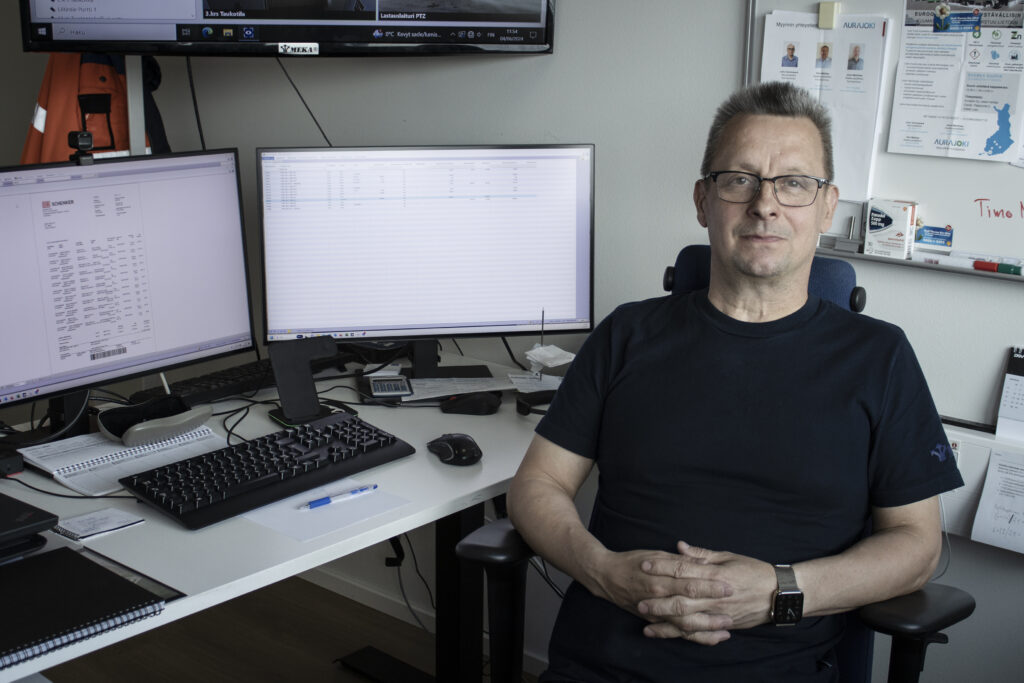
Photo. “Safety is our number one priority. That’s where everything starts,” says Meka Pro Oy’s Occupational Safety Manager and Operations Manager, Mika Elsilä.
How is occupational safety organized at Meka Pro – who is responsible for what, and how does cooperation work?
At Meka, occupational safety is managed comprehensively on many levels. “Supervisors are responsible for operations within the line organization and for safety in daily supervision and orientation,” explains Mika Elsilä. However, the greatest responsibility for safety always lies with the company’s top management. “The CEO carries the ultimate responsibility. Different levels have different roles in safety management. The CEO is the one who enables the maintenance of the safety system – by providing the necessary resources, whether financial or human,” Mika adds. In other words, top management lays the foundation for organizing occupational safety.
Meka has an Occupational Safety Committee, a body that develops, plans, and supervises safety matters at the practical level. This committee always has a majority representation from employee representatives. “In practice, this means that if there is one employer representative, there must be three employee representatives. The minimum requirement for the committee is four members, and Meka has exactly four,” Elsilä explains. Mika represents the employer in the committee as the Occupational Safety Manager. The other members include the employees’ safety representative, deputy safety representatives for both white- and blue-collar workers, and the committee secretary, who records meeting minutes but has no voting rights.
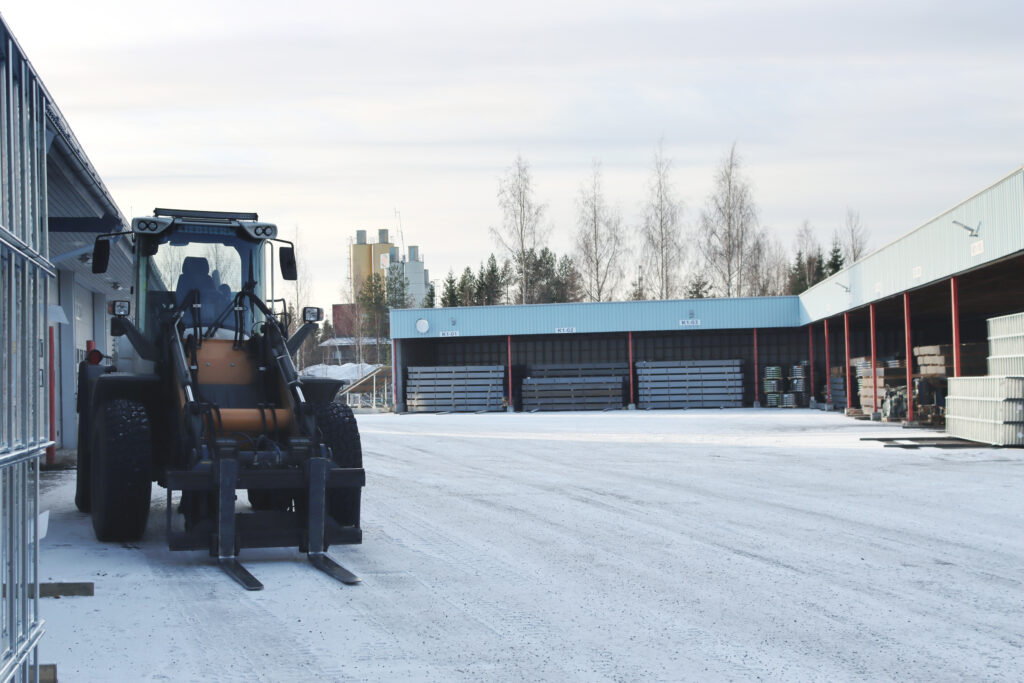
Photo. Mika Elsilä is authorized to train employees in both occupational safety card courses and forklift and wheel loader operation.
How committed is Meka’s management to occupational safety?
“Meka’s management is genuinely committed to safety and truly cares about it. Their involvement and support are top-level,” Mika says appreciatively. Whenever funding, time, or personnel are needed to ensure safety, those resources are always made available. The management also actively supports safety training at all levels. Mika himself has completed around 250–300 hours of safety-related training and is certified to conduct occupational safety card and machinery operator training.
How would you describe Meka Pro’s current safety situation?
According to Mika, Meka Pro’s safety situation is at least good – if not excellent. The company has highly functional safety observation systems and practices in place. “Accidents, sick leaves, and hazard reports are closely monitored. Whenever we receive an indicator, it’s immediately addressed, and actions are taken. For instance, if there’s a safety alert regarding a machine, it’s taken out of service until the issue is resolved and it’s safe to use again,” Mika explains.
Meka Pro has recorded over a thousand consecutive accident-free days, a figure that speaks volumes. A representative from the Regional State Administrative Agency has noted that few northern Finnish companies have gone over two years without an accident — Meka is one of those rare cases. 97% of employees have completed occupational safety card training, and over 25% are first aid certified, far exceeding the national requirement of 10%.
“Efficient safety observation systems and practices foster an accident-free workplace. If something is noticed that could potentially cause harm, a safety observation is reported, and the issue is promptly addressed. At Meka, the reporting of near-miss incidents is at an excellent level,” explains Elsilä.
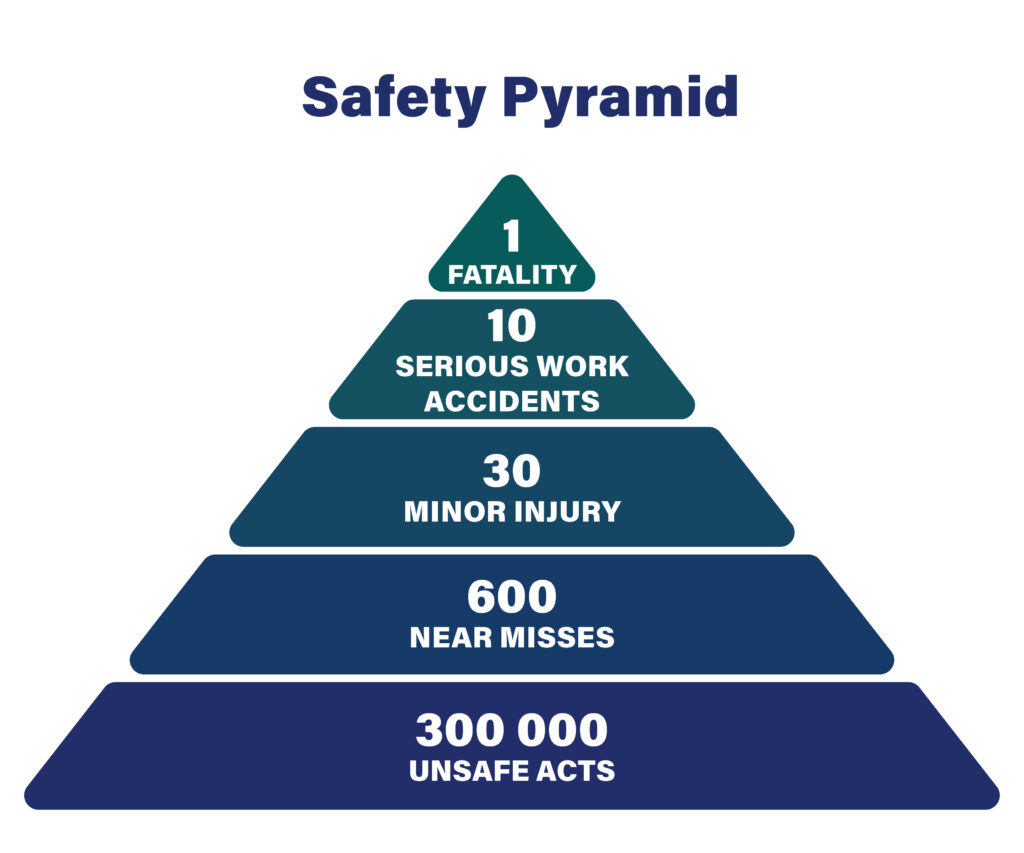
This is illustrated by the somewhat debated but still highly concrete accident pyramid theory developed by Herbert Heinrich in the 1930s and later refined by Frank Bird in the 1960s. According to the theory, 300,000 near misses lead to 10 serious injuries and one major accident or fatality.
Are there any specific technologies or systems that support safety at Meka?
“The safety observation system is very efficient. When a report is filed, notifications are automatically sent to several parties so that the issue can be addressed immediately,” says Mika. All data related to absences, hazard reports, and accidents are centralized in the same system.
When it comes to orientation, general onboarding is handled by the immediate supervisor. “Especially in production and order handling, job-specific training is provided by the most knowledgeable employee, who is specifically appointed for the task,” Mika explains. This way, the new employee knows exactly who to ask for guidance. “But ultimately, the supervisor bears the responsibility,” he adds. Both the Occupational Safety Manager and the Quality Manager closely follow labor legislation and its requirements. “In most cases, we’re already fully compliant,” Mika notes.
Has occupational safety improved during your career at Meka?
Mika has been instrumental in building and developing Meka Pro’s safety practices over the years. Many current systems and procedures originated from his and the safety committee’s initiatives. “The committee, thorough accident investigations, and the establishment of hazard monitoring practices are examples of long-term development work,” he explains.
One of the latest improvements is the monitoring of lighting, temperature, and noise levels in dozens of factory areas as part of regular 6S inspections. These measurements help identify potential health or safety risks early and improve workplace conditions proactively.
How has occupational safety evolved in the industry in general?
Mika laughs as he reflects on his career: “It’s a miracle I’m still here.” Both work culture and safety practices have developed tremendously over the decades. “Thirty years ago, no one really thought about safety,” he adds. Today, safety is taken seriously across the industry.
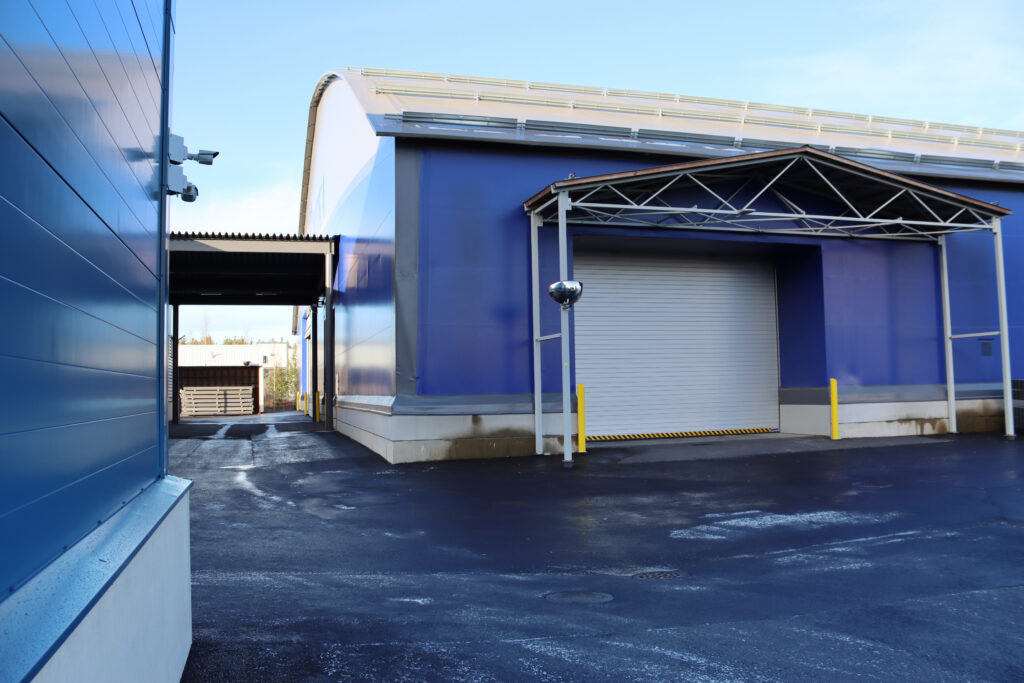
Photo. Traffic within the factory area remains a significant risk, despite measures like speed limits and safety mirrors.
How do employees participate in improving safety?
“Quite well,” Mika says. “The Safety Committee plays a key role in engaging employees.” The committee develops proposals, and employees are strongly represented within it. Workers can raise issues through their representatives, ensuring continuous development. “Some people underestimate the importance of the committee, but it’s actually a crucial body that can push forward issues individuals might hesitate to bring up,” Mika emphasizes.
Employee-initiated safety improvement suggestions have also become increasingly common, showing growing engagement in the company’s safety culture.
What are Meka’s future goals for occupational safety?
“Maintaining a zero-accident level is our main goal,” says Mika. “We naturally want to keep it that way.” Another goal is to increase the number of hazard reports. “If no safety observations are made, then no improvement suggestions arise either. If people feel there are no risks, then is there really nothing to improve?” he asks.
By focusing on preventive thinking and encouraging proactive behavior, Meka aims to reduce risks even further. “We want people to think ahead, not just react,” Mika explains. He hopes to promote this mindset through the Safety Committee so that employees would naturally consider safety as part of their daily work — without being reminded.
The next visible step in improving safety will be updating and adding traffic signs for truck traffic on the factory premises — an important measure since internal traffic remains one of the biggest risks.
How is safety reflected in Meka Pro’s values and company culture?
“Safety is our number one priority — that’s where we start,” Mika emphasizes. “Of course, financial stability is also necessary to support safety measures.” According to him, the company genuinely values and invests in occupational safety.
Mika’s key principles for successful safety work
“Everyone must recognize their own responsibilities and obligations regarding occupational safety — from employees to top management.”
When everyone understands and follows their role, workplace safety thrives. Every employee has the right to demand safer working methods and equipment — and if necessary, to refuse work that endangers themselves or others. But with rights come responsibilities: everyone must also look after their own and their coworkers’ safety. For instance, reporting hazards to one’s supervisor is a key obligation.
“Occupational safety exists to protect employees.”
The goal is simple: every worker should go home as healthy as they arrived — or even healthier. The focus shouldn’t only be on spotting dangers but also on thinking, “What can I do to improve safety myself?”
Employee-initiated safety improvement suggestions have also become increasingly common, showing growing engagement in the company’s safety culture.

Photo. Efficient safety observation systems and practices foster a strong zero-accident culture.
Need more information?
Need more information?
See more news
News
See more news
News

See more information
Instructions & downloads
See more information